Why Concrete Cracks in Central PA
A practical guide to concrete cracking in freeze–thaw climates: joints, base prep, drainage, de-icers, and realistic expectations.
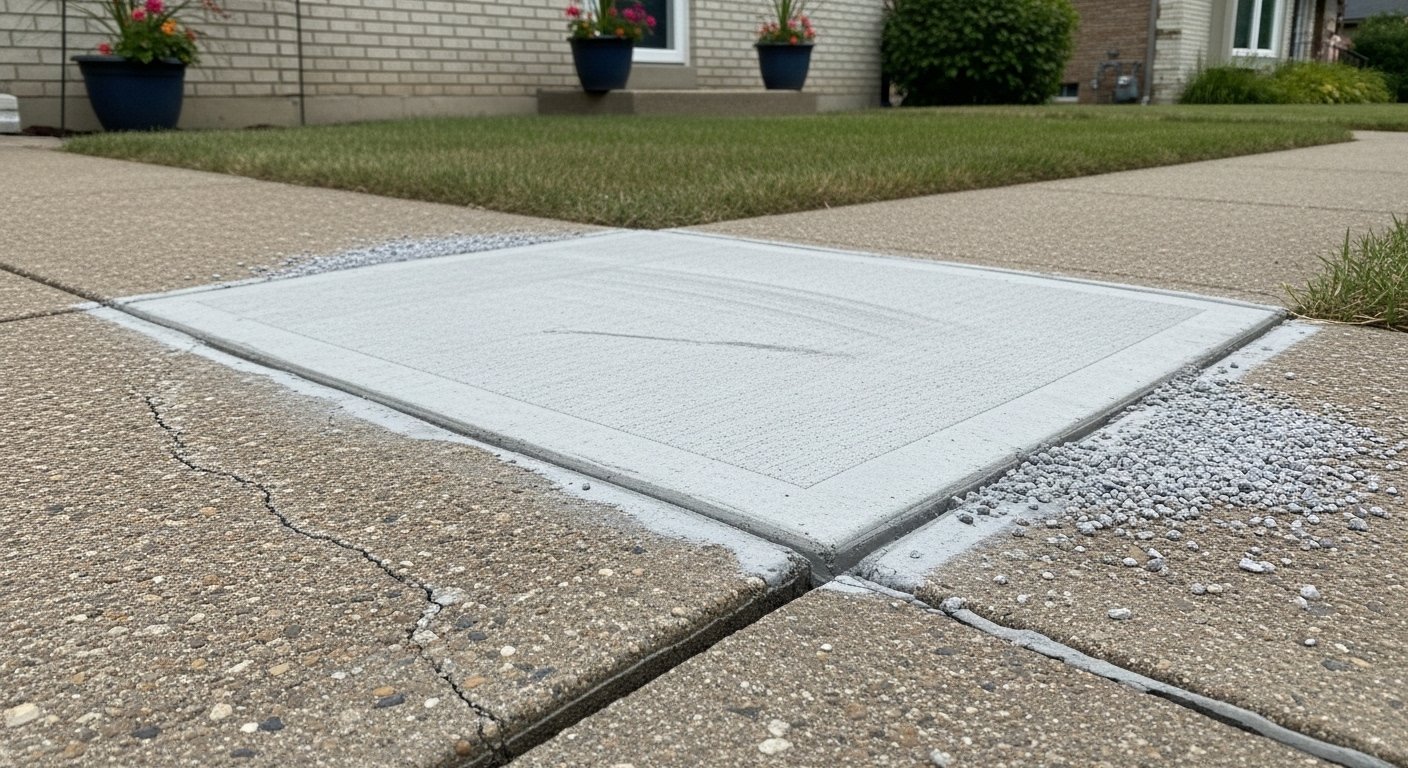
Cracking isn’t always a “bad job”
Concrete is strong in compression but weaker in tension. It shrinks as it cures and reacts to temperature changes. Some cracking is normal. The goal is to control where cracking happens and prevent the type of movement that creates offsets and trip hazards.
The most common cracking triggers we see
In our region, the biggest triggers are water and movement: saturated subbase, freeze expansion, and poor drainage paths that keep the slab wet.
1) Weak or poorly compacted subbase
If the base isn’t stable, slabs settle unevenly and cracks open. This often shows up as separation and offset at joints.
Call or text and we’ll walk through options before you commit.
2) Drainage that sends water under the slab
Water doesn’t have to be dramatic to cause problems. Slow ponding and repeated saturation undermine the base, especially near edges.
3) Joints placed too far apart (or not planned)
Control joints are there to create a “preferred” crack line. When joints are missing or too wide-spaced, cracking happens wherever the slab decides.
4) Winter de-icers and surface scaling
De-icing chemicals can accelerate surface deterioration, especially when combined with freeze–thaw. Even good concrete can scale if it’s exposed to harsh chemicals before it has cured properly.
What actually helps (and what doesn’t)
The best protection is base + drainage + joints. Reinforcement has a role, but it doesn’t replace base stability. Sealers can help with cleaning and surface protection, but they’re not a substitute for a good slab design.
When to repair vs replace
If cracks are cosmetic and the slab is stable, repairs may be sufficient. If you have offset slabs, widespread settlement, or severe scaling, replacement often becomes the better long-term plan.
Related services
If you’re gathering quotes, these pages explain scope and pricing factors in more detail.
FAQs
Is every crack a problem?
No. Hairline or controlled cracks can be cosmetic. Offset cracks and separation usually indicate movement that needs attention.
Do saw-cut joints prevent all cracking?
They don’t prevent cracking, but they help cracks occur in cleaner, planned locations.
Does adding more reinforcement stop cracks?
Not necessarily. Reinforcement helps with load distribution and crack behavior, but base movement and drainage still drive most failures.
Are de-icers always bad for concrete?
They can be harsh, especially on newer concrete. The safest approach is to follow curing guidance and use the mildest de-icer practical.
What’s the biggest preventable cause?
Poor base prep and drainage. Fixing water movement often has the biggest impact.